






The leading enterprise resource planning (ERP) systems for medium-sized companies in 2026 include SAP Business One, Oracle NetSuite, Microsoft Dynamics 365 Business Central, Odoo, and Infor CloudSuite. These platforms unify finance, inventory, supply chain, and HR data into a single system, helping growing businesses reduce manual work and make faster, data-backed decisions. The right choice depends on budget, industry, and how much customization your operations require.
Growing beyond the startup stage brings a familiar problem: spreadsheets stop working. Finance teams lose track of cash flow, warehouse managers can’t see real-time stock levels, and sales data lives in five different tools that never talk to each other. This is exactly the gap an enterprise resource planning system is built to close.
For medium-sized companies specifically, the stakes are high. You need enough functionality to manage complex operations, but not so much overhead that implementation drains your budget and your team’s patience. This guide breaks down what an ERP system actually is, the platforms worth considering, and how to think through implementation before you sign a contract.
What Is an Enterprise Resource Planning System?
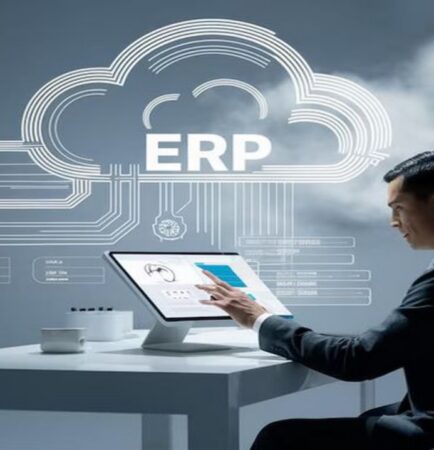
An enterprise resource planning system is software that centralizes core business processes finance, procurement, inventory, manufacturing, human resources, and customer data into one connected platform. Instead of each department running its own disconnected tool, an ERP system gives every team access to the same real-time information.
For a mid-sized company, this typically means replacing a patchwork of accounting software, spreadsheets, and standalone inventory tools with a single source of truth. When a sales order comes in, the ERP system can automatically update inventory counts, trigger a purchase order for the supplier, and flag the transaction for the finance team, all without manual data entry.
Enterprise Resource Planning System Software: What to Look For
Not every ERP system software solution is built for the same company size or industry. When evaluating options, medium-sized businesses should weigh the following:
- Scalability: Choose a system that can handle your growth for the next 3–5 years, not just your current headcount.
- Industry fit: A manufacturer has different needs than a retailer or a professional services firm. Look for vendors with proven experience in your sector.
- Deployment model: Cloud-based ERP systems generally offer faster deployment and lower upfront cost than on-premise systems, which suit companies with strict data residency requirements.
- Integration capability: Your ERP system needs to connect with existing tools CRM, e-commerce platforms, payment gateways without requiring a full rebuild of your tech stack.
- Total cost of ownership: Licensing is only part of the cost. Factor in implementation, training, and ongoing support.
Which ERP Platforms Are Best Suited for Medium-Sized Companies?
A handful of platforms consistently come up in ERP shortlists for mid-market businesses:
SAP Business One is built specifically for small and medium enterprises, offering strong financial management and inventory control with the backing of SAP’s broader ecosystem. It suits companies planning to eventually scale into SAP’s larger enterprise suite.
Oracle NetSuite is a cloud-native ERP system popular with fast-growing companies, particularly in retail and e-commerce, thanks to its strong financial reporting and multi-subsidiary management.
Microsoft Dynamics 365 Business Central appeals to companies already using Microsoft 365 and Azure, since it integrates natively with tools like Excel, Outlook, and Teams.
Odoo offers a modular, open-source-friendly approach, letting companies start with a few applications (like accounting or inventory) and add more as they grow, often at a lower entry cost.
Infor CloudSuite focuses heavily on specific industries like manufacturing and healthcare, offering deeper vertical-specific functionality than more generalized platforms.
Choose SAP Business One or Infor CloudSuite if deep industry-specific functionality matters more than upfront cost. Choose Odoo or Business Central if you need a lower-cost entry point with room to expand modules over time.
What Are the Common Challenges Faced During ERP System Implementation Projects?
ERP implementation projects fail more often due to organizational issues than technical ones. The most common challenges include:
- Poor data migration planning: Moving years of historical data from legacy systems into a new ERP structure often uncovers inconsistent or duplicate records that need cleaning before go-live.
- Underestimating change management: Employees accustomed to old workflows resist new processes, especially if training is rushed or minimal.
- Scope creep: Adding customizations mid-project extends timelines and inflates budgets well beyond initial estimates.
- Insufficient executive sponsorship: Without visible leadership buy-in, teams deprioritize the transition, and implementation stalls.
- Choosing the wrong implementation partner: A vendor unfamiliar with your industry can misconfigure workflows that don’t map to how your business actually operates.
Working with an experienced implementation partner who understands both the software and your specific industry significantly reduces these risks. Firms like Pixonix specialize in connecting ERP platforms with existing enterprise stacks, including CRM systems, payment gateways, and legacy middleware, so companies avoid the disconnected-system problem that ERP is supposed to solve in the first place.
How Can an Enterprise Resource Planning Solution Improve Supply Chain Efficiency?
An enterprise resource planning solution improves supply chain efficiency by giving every department access to the same real-time data, eliminating the delays and errors that come from manual updates across disconnected systems.
Specific improvements include:
- Real-time inventory visibility: Warehouse and sales teams see identical stock counts, reducing overselling and stockouts.
- Automated demand forecasting: ERP systems analyze historical sales data to predict future demand, helping companies order the right amount of inventory at the right time.
- Streamlined procurement: Purchase orders can trigger automatically when inventory hits a threshold, reducing the lag between demand and supply.
- Supplier performance tracking: Centralized data makes it easier to spot which suppliers consistently deliver late or below quality standards.
- End-to-end traceability: For manufacturers, an ERP system can track a product from raw material to finished goods, which is critical for quality control and regulatory compliance.
Companies that centralize supply chain data through an ERP system typically see faster order fulfillment and fewer inventory discrepancies, because decisions are based on live data rather than outdated reports.
Choosing the Right Path Forward
Selecting an enterprise resource planning system is one of the more consequential technology decisions a medium-sized company will make. The right platform streamlines operations for years; the wrong one creates friction that outlasts the implementation project itself.
Start by mapping your current pain points, whether that’s inventory visibility, financial reporting delays, or disconnected supply chain data, and match those needs against the platforms outlined above. From there, prioritize vendors and implementation partners with direct experience in your industry.
If your business is evaluating how an ERP system should connect with your broader technology stack, Pixonix’s system integration and automation services are worth exploring as part of your due diligence process.
Frequently Asked Questions
How much does an ERP system typically cost for a medium-sized company?
Costs vary widely depending on the number of users, modules required, and deployment model, but mid-market ERP systems generally range from cloud subscription fees per user per month to larger one-time licensing costs for on-premise deployments. Implementation and training fees are typically separate from licensing costs.
How long does an ERP implementation usually take?
For medium-sized companies, ERP implementation projects commonly take between three and twelve months, depending on the complexity of data migration, the number of integrations required, and how much customization is needed.
What are the risks of not upgrading to an ERP system?
Companies relying on disconnected spreadsheets and standalone tools often face data inconsistencies, slower decision-making, and difficulty scaling operations as order volume and headcount grow.
Are there alternatives to a full ERP system?
Some companies start with point solutions, like a dedicated inventory management tool or accounting software, and integrate them through middleware rather than adopting a full ERP system. This works for simpler operations but often becomes less efficient as complexity grows.
Who should be involved in choosing an ERP system?
Finance, operations, IT, and department heads who will use the system daily should all be involved in vendor evaluation, since an ERP system’s success depends on adoption across the organization, not just executive approval.